

The Philosophy Of Thelema
- AI it News

- Dec 8, 2025
- 9 min read
Unlocking Your True Will: A Practical Guide to the Philosophy of Thelema

The whispers of "Do what thou wilt shall be the whole of the Law" have echoed through esoteric circles for over a century, often misunderstood, sometimes feared, and frequently reduced to simplistic interpretations of hedonism or unchecked ego. But beneath these superficial readings lies a profound and liberating philosophy: Thelema. More than just a set of beliefs, Thelema is a vibrant, dynamic path designed to empower individuals to discover and live their True Will, leading to a life of purpose, fulfillment, and authentic self-expression.
If you've ever felt a nagging sense that there's more to life, a deeper calling you're struggling to pinpoint, or a desire to break free from societal constraints that feel inauthentic, then this exploration of Thelema is for you. It’s not about dogma or blind faith, but about rigorous self-discovery, personal responsibility, and the joyful embrace of your unique existence.
The Genesis of Thelema: Where a New Aeon Dawned
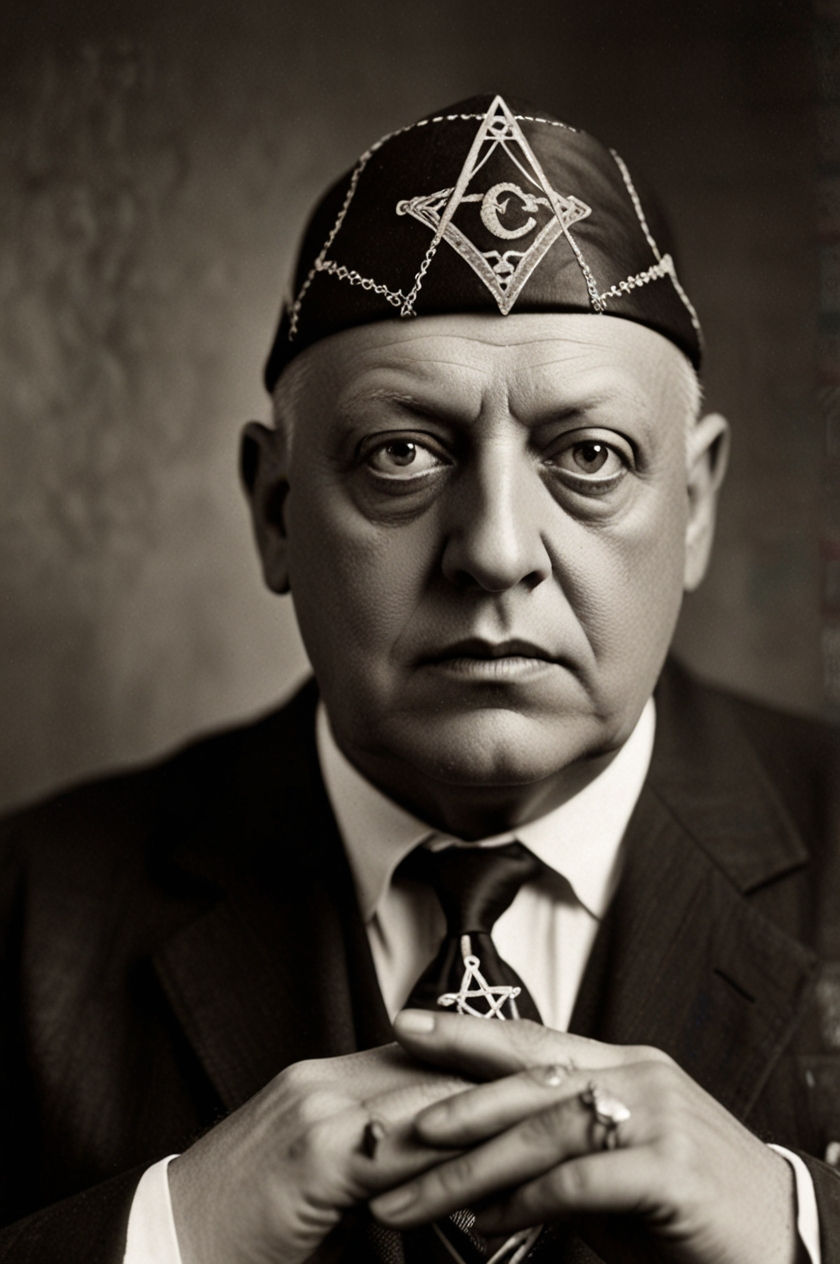
Thelema emerged from the visionary work of Aleister Crowley (1875-1947), a figure whose life and writings continue to spark controversy and fascination. In 1904, in Cairo, Egypt, Crowley claimed to have received a divine revelation, recorded in a text called The Book of the Law (also known as Liber AL vel Legis). This book, considered the foundational scripture of Thelema, introduced its core tenets and inaugurated what Crowley termed the "New Aeon" of Horus, characterized by individual liberty and the reign of the divine child.
It's crucial to understand that Crowley’s reception of The Book of the Law was not an isolated event. He was deeply immersed in occult traditions, mysticism, and Eastern philosophies, and his philosophy of Thelema is a synthesis of these influences, filtered through his unique spiritual experiences. As he himself stated in The Book of the Law: "Every man and every woman is a star." This powerful metaphor lies at the heart of the Thelemic worldview. Just as each star has its unique orbit and inherent brilliance, so too does each human being possess a unique essence and destiny.
The Cornerstone: "Do What Thou Wilt Shall Be the Whole of the Law"
This iconic phrase is the absolute bedrock of Thelema. But what does it truly mean? It’s not a license for unbridled selfishness or a call to act on every fleeting impulse. To truly grasp its meaning, we must delve deeper:
"Do What Thou Wilt": This refers to your True Will. It's not about superficial desires or ego-driven whims. Your True Will is your deepest, most authentic purpose in life, the inherent trajectory of your soul. It's the path that, when followed, brings you into alignment with your most profound self and the universe. It's the expression of your unique star-nature.
"Shall Be the Whole of the Law": This means that the pursuit and fulfillment of your True Will is the highest ethical and spiritual principle. It supersedes external moral codes, societal expectations, and even conventional religious doctrines. When you are living in accordance with your True Will, you are inherently acting in alignment with the grander cosmic order.
Crowley himself elaborated on this in his commentary on The Book of the Law, stating: "This is the Law of the Strong, the Law of the Wise, the Law of the Free." Thelema encourages strength of character, clarity of mind, and the freedom that comes from self-mastery.
The Complementary Principle: "Love is the Law, Love Under Will"
While "Do what thou wilt" is about individual realization, "Love is the Law, Love Under Will" addresses the interconnectedness of all beings and the appropriate expression of that connection. This is not a passive, sentimental love, but an active, conscious force.
"Love is the Law": This signifies that love, in its broadest and most profound sense, is the fundamental force that binds the universe together. It is the energy of creation, connection, and transformation.
"Love Under Will": This is the crucial qualifier. Our love, like our actions, must be guided by our True Will. It means expressing love in ways that are authentic to our nature and that serve our greater purpose. It means recognizing the divine spark in others and interacting with them in ways that honor both their True Will and our own. It prevents love from becoming a manipulative tool, a burden, or a distraction from our authentic path.
Crowley explained this by saying: "The word of the Law is Θελημα [Thelema], which means Will. This and the word of the Law is A G A P E [Agape], which means Love." He saw these two fundamental principles as inextricably linked.
The Three Pillars of Thelemic Practice

The philosophy of Thelema isn't just theoretical; it’s a practical framework for living. Its implementation rests on three interconnected pillars:
1. Self-Discovery: Knowing Thyself
The most critical step in Thelemic practice is the journey of self-discovery. This is where the hard work begins, requiring honesty, introspection, and courage.
Understanding Your True Will: This is the ultimate goal. It's about identifying your unique talents, passions, inclinations, and the specific contribution you are meant to make to the world. It’s not necessarily about a grand, world-changing destiny, but about living your life with absolute authenticity and purpose, whatever that may entail.
Questioning Societal Conditioning: We are bombarded with expectations from family, society, religion, and media about who we should be and what we should want. Thelema challenges us to critically examine these external impositions and discern what truly resonates with our inner self. Are your desires truly your own, or have they been instilled in you?
Exploring Your Nature: This involves embracing all aspects of yourself – the light and the shadow. Thelemic practice encourages a non-judgmental acceptance of your inherent nature, understanding that even your perceived flaws can be integral to your unique path. As Crowley wrote in Liber VII, "For pure will, unassuaged of purpose, delivered from the lust of result, is every way perfect." This highlights the importance of focusing on the act of willing, rather than fixating on the outcome.
Meditation and Contemplation: Various contemplative practices are employed to quiet the discursive mind and access deeper levels of intuition and awareness. This can include mindfulness, visualization, ritual, or any practice that facilitates inner stillness and self-reflection.
Journaling: Keeping a detailed journal can be an invaluable tool for tracking your thoughts, emotions, dreams, and experiences, revealing patterns and insights into your inner landscape.
2. Self-Mastery: Governing Thyself
Once you begin to understand your True Will, the next step is to cultivate the discipline and strength to live in accordance with it. This is the path of self-mastery.
Discipline and Willpower: Living your True Will often requires overcoming inertia, fear, and ingrained habits. Thelema emphasizes the development of strong willpower, not as a means of suppressing desires, but as a tool to direct your energy effectively towards your chosen path.
Overcoming Obstacles: The path of True Will is rarely smooth. Self-mastery involves developing resilience and the ability to navigate challenges, setbacks, and internal resistance.
Ethical Responsibility: Far from being amoral, Thelema places a strong emphasis on responsibility. If "Do what thou wilt" is the law, then each individual is solely responsible for the consequences of their actions. This fosters a mature and self-aware approach to life.
Cultivating Virtues: While not adhering to a fixed moral code, Thelemic practice often leads to the cultivation of virtues such as courage, honesty, generosity, and wisdom, as these are often essential for the full expression of one's True Will. Crowley stated in The Book of the Law: "And the sign shall be my serpent's flood, and the fire of the dragon. I have no use for armies, nor for slaves, nor for those that are not free." This speaks to a rejection of coercion and a valuing of individual liberty and inner strength.
3. Self-Expression: Manifesting Thyself
The culmination of self-discovery and self-mastery is the confident and joyful expression of your True Will in the world.
Authentic Action: This is about living your life in alignment with your deepest truths, whether that means pursuing a particular career, creating art, building relationships, or engaging in any activity that allows your unique brilliance to shine.
Ritual and Magick: Thelema incorporates magick as a practical means of harmonizing the individual with the universe and bringing about desired changes. This is not about supernatural manipulation, but about the focused application of willpower and intent to achieve specific goals, often through symbolic ritual. Crowley defined magick as "the Science and Art of causing Change to occur in conformity with Will."
Creative Fulfillment: The expression of True Will is inherently creative. It’s about bringing something new and authentic into existence, whether through grand artistic endeavors or the simple act of living one's life with passion and integrity.
Embracing Joy and Ecstasy: Thelemic practice is ultimately about living a full and joyful life, embracing the richness of experience, and celebrating the divine spark within yourself and others.
Common Misconceptions About Thelema
It's vital to address the persistent misunderstandings surrounding Thelema to clear the air and encourage a more informed understanding:
"Thelema is Hedonism": This is perhaps the most common misinterpretation. While Thelema does encourage the enjoyment of life and the pursuit of pleasure, it is not about indiscriminate indulgence. The focus is on fulfilling your True Will, which can involve hard work, discipline, and even sacrifice, not merely chasing fleeting gratifications. As noted earlier, "love under will" guides these expressions.
"Thelema is Satanic": This is entirely incorrect. Thelema is not Satanic. While it’s a non-Abrahamic, often antithetical system to traditional religions, its focus is on the individual's divine potential and the pursuit of their unique destiny, not on worshipping or embodying a figure of evil. Crowley himself famously declared, "My religion is a religion of love. Love pure and simple."
"Thelema is Egocentric and Selfish": While Thelema emphasizes the individual, it does so within a framework of universal interconnectedness and responsibility. The pursuit of True Will is not about dominating others but about harmonizing oneself with the cosmic order, which inherently involves respecting the True Will of others. The principle of "love under will" ensures that personal fulfillment doesn't come at the expense of others.
"Thelema is Difficult and Inaccessible": While Thelemic philosophy is profound and the practice of self-discovery can be challenging, the core principles are remarkably simple and accessible. The journey begins with a willingness to look inward and to question one's own motivations and desires.
Implementing Thelma in Your Life: A Practical Approach
So, how can you begin to incorporate Thelemic principles into your daily existence? It’s a journey, not a destination, and the first steps are often the most crucial.
Begin with Self-Inquiry: Dedicate time each day or week to quiet introspection. Ask yourself:
What truly brings me joy and a sense of purpose?
What are my innate talents and inclinations?
What societal expectations am I currently living by that feel inauthentic?
What are my deepest fears and how do they hold me back?
Embrace the Principle of "Wilt": Start observing your desires. Are they fleeting whims or something deeper? Practice making conscious choices that align with what you genuinely want, even in small matters. Focus on the act of willing and the intention behind your actions.
Practice "Love Under Will" in Relationships: Pay attention to how you interact with others. Are your expressions of affection and support genuinely aligned with your True Will and theirs? Do you respect their autonomy and unique path? Strive to engage in relationships that are mutually empowering and authentic.
Experiment with Simple Rituals: You don't need elaborate ceremonies to begin. Simple personal rituals, like dedicating a few minutes each morning to setting an intention for the day aligned with your inner compass, or performing a short visualization exercise before undertaking a task, can be powerful. Consider exploring the Lesser Ritual of the Pentagram, a foundational ritual in ceremonial magick often used for protection and purification, as a starting point.
Read and Study: Immerse yourself in the foundational texts. The Book of the Law is essential, but also explore Crowley's commentaries and other Thelemic writings to deepen your understanding. Resources like Thelema Lodge and various online communities can offer support and further learning.
Cultivate Courage and Responsibility: Be willing to act on your insights, even when it’s difficult. Take ownership of your choices and their consequences. True freedom comes from embracing full responsibility for your life.
Be Patient and Persistent: The journey of discovering and living your True Will is a lifelong endeavor. There will be moments of clarity and moments of confusion. The key is to remain committed to the process of self-discovery and to keep striving for authenticity.
The Future is Yours to Will

Thelema offers a powerful antidote to a world that often seeks to homogenize individuals and dictate their paths. It's a philosophy that champions individual sovereignty, encourages profound self-awareness, and ultimately, liberates us to live lives of purpose, passion, and authentic joy.
As the poet William Blake, another visionary who inspired Crowley, wrote: "The tyger burns bright, in the forests of the night..." Thelema calls us to recognize the burning brilliance within ourselves, the unique tiger that we are, and to unleash its power into the world. It’s an invitation to step into the fullness of your being, to embrace the grand adventure of self-realization, and to declare, with every fiber of your soul: "My Will be done." The universe, in its infinite wisdom, awaits your unique song. Will you dare to sing it?



Comments