

The 5-Year Countdown
- AI it News

- 2 minutes ago
- 5 min read
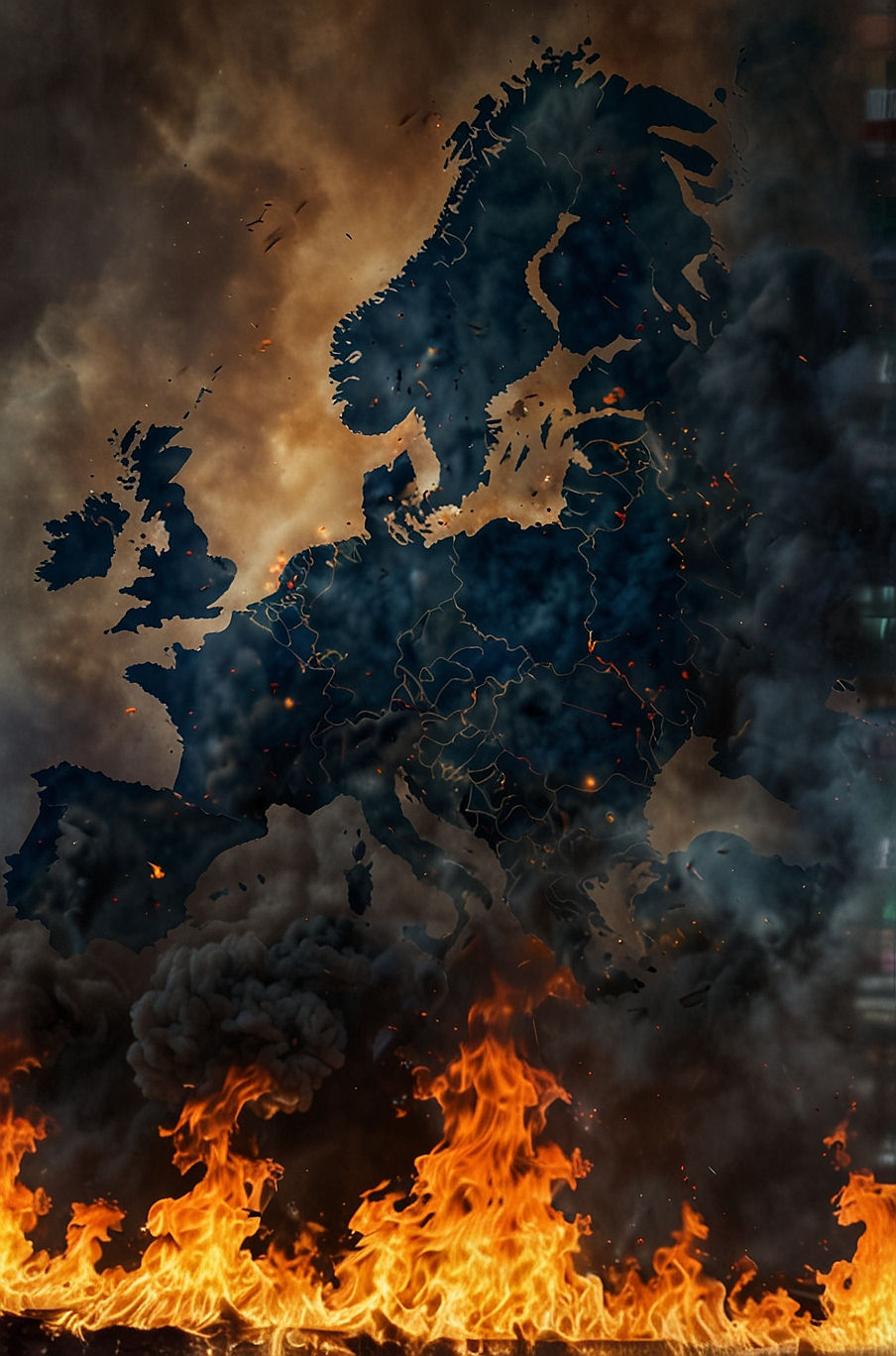
How 40°C Summers and Desiccated Flora Are Priming Europe for Catastrophic Megafires
For decades, the European summer was synonymous with leisurely Mediterranean holidays, vibrant green landscapes, and sun-drenched afternoons. Today, that postcard-perfect image is rapidly evaporating.
As global temperatures climb, Europe is warming twice as fast as the global average. With summers routinely breaching the 40°C (104°F) threshold, climate scientists, ecologists, and forestry experts are issuing a stark warning: Europe has less than five years to overhaul its land management and climate strategies before runaway, out-of-control wildfires permanently transform the continent's landscape.
At the heart of this looming ecological disaster is a silent, desiccating process turning Europe’s rich flora (and the habitats of its native fauna) into a massive, continental tinderbox.
Here is a comprehensive look at why Europe is on the brink of a wildfire tipping point, the science behind the "dry flora" crisis, and what must be done in the next 60 months to prevent a catastrophic burn.
1. The New Normal: Why 40°C Summers Are No Longer Anomalies
Historically, temperatures exceeding 40°C in Europe were rare, localized events reserved for the absolute peak of Southern European summers. Today, these extreme heatwaves are starting earlier, lasting longer, and pushing further north into countries like France, Germany, and even the United Kingdom.
According to data from the Copernicus Climate Change Service, Europe experienced its hottest summers on record over the last few consecutive years.
The Dynamic of the 40°C Threshold
When ambient temperatures reach 40°C, the atmospheric demand for moisture skyrockets. This phenomenon, known as a high Vapor Pressure Deficit (VPD), means the air essentially acts as a sponge, aggressively drawing moisture out of the soil and living plants.
Accelerated Evaporation: Water reservoirs shrink, and the water table drops.
Agricultural Stress: Crops fail, requiring massive irrigation that further depletes water reserves.
The "Browning" of Europe: Lush green forests turn a brittle, dusty brown—a visual indicator of a landscape losing its resilience.

2. The Science of the Tinderbox: Desiccated Flora and Fuel Loads
To understand why the next five years are so critical, we must look at the state of Europe’s vegetation (its flora).
When plants are exposed to prolonged 40°C heat combined with systemic drought, they enter survival mode. They shed leaves, stop growing, and experience high mortality rates. This creates two distinct fire hazards:
Live Fuel Moisture Depletion
Living plants usually contain enough water to resist catching fire from a stray spark. However, under chronic heat stress, the moisture content in living pine needles, eucalyptus leaves, and scrubland (like the Mediterranean garrigue and maquis) drops below critical thresholds. Once this happens, living plants burn almost as easily as dead wood.
Dead Fuel Accumulation
As trees shed limbs and undergrowth dies off due to heat stress, it accumulates on the forest floor. This build-up of dry needles, twigs, and dead leaves is known as fuel load.
In a balanced ecosystem, moisture decomposes this matter.
In a desiccated 40°C ecosystem, this dead flora remains dry, airy, and highly combustible—creating the perfect "kindling" layer over millions of hectares.
3. Why the Next 5 Years are the Critical Tipping Point
Why is the timeline so tight? Why "less than five years"?
Ecologists point to a dangerous convergence of factors that are reaching a critical threshold—or tipping point—by the late 2020s.
[Consecutive Drought Years]
       + [40°C Heatwaves]
       + [Dead Flora Accumulation]
       = Ecosystem Collapse & Megafires (The Tipping Point)
The Compounding Effect of Consecutive Droughts
Ecosystems can often recover from a single year of extreme drought. However, Europe is now experiencing consecutive years of severe water deficits. The subterranean aquifers are depleted, meaning trees can no longer tap into deep-water reserves during heatwaves. Within the next three to five years, millions of deep-rooted trees across Spain, Italy, Greece, and Portugal are projected to die standing up, turning entire national parks into standing deadwood.
The Breakdown of Traditional Suppression Tactics
European firefighting strategies have historically relied on "aggressive initial attack"—essentially, putting out fires while they are still small. However, when the entire landscape is dry, fires ignite simultaneously in multiple locations (often due to dry lightning or human negligence). Resources become overwhelmed instantly.
Within five years, if current warming and drying trends continue, we will shift from an era of manageable wildfires to an era of unstoppable megafires that defy human suppression capabilities.
4. The Nightmare Scenario: Megafires Crossing Pyrocumulus Thresholds
If Europe crosses this five-year threshold without drastic intervention, we will witness a transition to a "pyro-geographic" regime. These are not the forest fires of the past; these are megafires that create their own weather systems.
Pyroconvective Storms
When vast swathes of dry flora burn intensely over large areas, they generate massive columns of heat and smoke. This can trigger the formation of pyrocumulus or pyrocumulonimbus clouds.
These "fire clouds" generate erratic winds, throwing embers miles ahead of the main fire front.
They can produce "dry lightning," igniting brand-new fires in completely untouched, dry areas.
At this stage, traditional firefighting methods—such as dropping water from planes—become useless, as the extreme heat evaporates the water before it even hits the ground.
Threat to Human Infrastructure and Biodiversity
These runaway fires will not be restricted to remote forests. They will cross agricultural lands, jump highways, and sweep through the Wildland-Urban Interface (WUI)—areas where housing developments meet natural vegetation.
Furthermore, Europe’s unique biodiversity is at risk. Ancient forests that have stood for centuries, hosting delicate ecosystems of flora and fauna, could be wiped out in a single afternoon, replaced by sterile, ash-covered landscapes that struggle to regenerate in an increasingly hostile climate.
5. Mitigating the Burn: What Europe Must Do in the Next 5 Years
Losing the battle to 40°C summers is not a foregone conclusion, but the window for preventative action is closing rapidly. To prevent Europe from burning, governments, foresters, and communities must implement a radical, coordinated strategy immediately.
Action Item | Strategy | Objective |
Active Forest Management | Mechanical thinning of dead flora, creation of wide firebreaks, and controlled, prescribed burning during cooler months. | Reduce the accumulated "fuel load" on the forest floor. |
Rethinking Reforestation | Moving away from highly flammable monocultures (like commercial pine and eucalyptus plantations) toward diverse, fire-resistant native deciduous trees (like oaks and maples). | Create natural, moisture-retaining barriers to slow down fire propagation. |
Advanced Early-Detection | Deploying satellite monitoring, AI-powered thermal cameras, and IoT sensors in high-risk forests. | Detect and extinguish ignitions within minutes of starting. |
Strict Land-Use Planning | Heavy restrictions on building in high-risk Wildland-Urban Interfaces and mandatory clearance zones around existing homes. | Protect human life and reduce the economic impact of unavoidable fires. |

The Bottom Line: A Choice of Landscapes
The data is clear. Europe’s climate has shifted, and the traditional green continent is drying out under the weight of sustained 40°C summers. The dry flora carpeting European forests is no longer just vegetation; it is fuel waiting for a spark.
We have a narrow, high-stakes window of less than five years to adapt our landscapes to this hotter, drier reality. If we fail to act, we will spend the next several decades watching Europe's rich natural heritage go up in smoke. The time for bureaucratic delay is over; proactive, aggressive climate adaptation must begin today.


Comments