

Celtic Jews?
- AI it News

- Dec 17, 2025
- 6 min read
The British Israelism Myth: Unraveling the Celtic-Israelite Connection
Introduction: A Tale of Ancient Origins

Myths have long shaped human identity, weaving threads of legend into the fabric of national consciousness. One of the most enduring—and controversial—of these is the theory that the British, Irish, and other Celtic peoples are descendants of a Lost Tribe of Israel, most commonly the Tribe of Dan. Known as British Israelism, this belief has captivated imaginations for centuries, blending biblical lore, Celtic mythology, and a longing to find ancient roots. Yet, while it resonates with spiritual seekers and conspiracy theorists alike, mainstream scholarship has consistently dismissed it as pseudohistory—a tale without empirical grounding. In this blog post, we’ll explore the origins, claims, and cultural allure of British Israelism, while dissecting why it falls flat under the scrutiny of modern science and history.
The Core of the Claim: Celts as Children of Israel
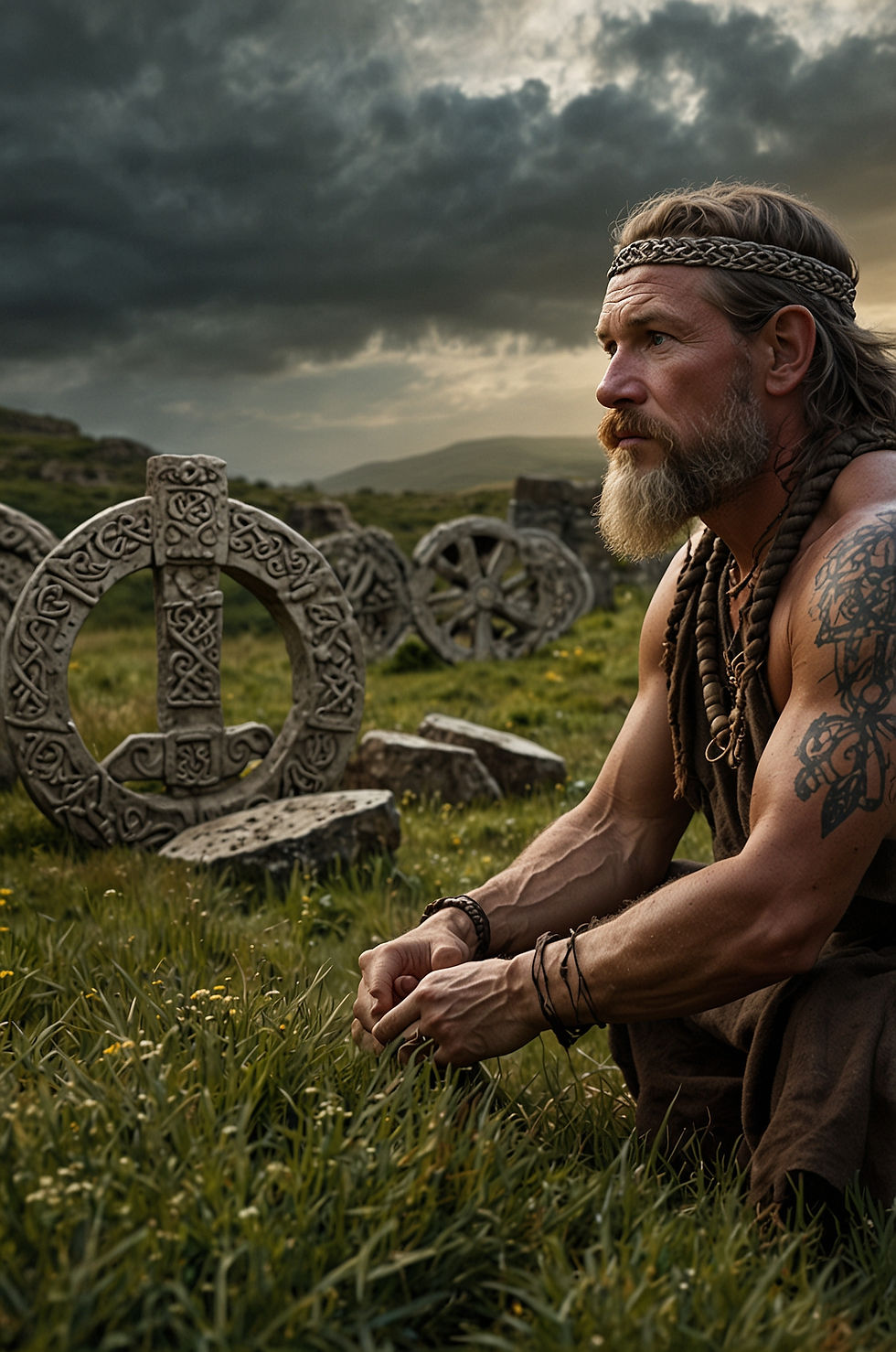
At the heart of British Israelism is a bold assertion: the ancient Israelites, after their exile in 722 BCE, migrated westward and eventually settled in what is now Britain and Ireland. Proponents argue that the Celtic peoples—specifically the Tuatha Dé Danann of Irish mythology—are the descendants of the Tribe of Dan, a seafaring group mentioned in the Hebrew Bible. This theory, popular in the late 19th and early 20th centuries, was fueled by a mix of biblical literalism, Romantic nationalism, and a hunger for grand narratives.
The connection hinges on the Tuatha Dé Danann, a supernatural race in Irish mythology said to be the ancestors of the Gaelic-speaking Irish. According to British Israelism, the name “Danann” is a distorted version of “Dan,” the Tribe of Dan being a biblical reference. Proponents claim that the Tuatha Dé Danann’s magical prowess, seafaring skills, and eventual decline mirror the biblical accounts of the Israelites. For example, author Rev. J. D. Patrick, a 19th-century proponent, wrote:
“The Danites, known for their maritime enterprises, fled the Assyrian conquest in 722 BCE and established themselves in the ‘ends of the earth’—the British Isles. There, they became the Tuatha Dé Danann, a name derived from ‘Dan’ and ‘Anu,’ a generic goddess.”
However, this interpretation is riddled with linguistic and historical leaps. The name “Danann” likely originates from the Irish goddess Danu, not the biblical tribe. As historian Tomás Ó Cathasaigh notes:
“The Tuatha Dé Danann are a mythological construct, not a historical ethnogenesis. To equate them with the Tribe of Dan is to conflate folklore with archaeology.”
The Tribal Logic: From Exile to Exile

British Israelism often traces its narrative through the biblical story of the Lost Tribes of Israel. After the Assyrian conquest of the Northern Kingdom in 722 BCE, the ten tribes were exiled, their fate unknown. Prophecies of their return have inspired countless theories, including their migration to the British Isles.
Proponents argue that the Tribe of Dan, known for its warriors and traders in the Bible (Judges 18:30–31), became seafarers after the exile. Using a mix of scripture and speculative geography, they map the “lost” Danites to the Atlantic coast of Europe. For instance, 19th-century activist John Urquhart of Cromarty claimed:
“The Danes of the North Sea are simply Dan of Israel, their name a linguistic remnant of their Hebrew origin.”
Yet, this logic collapses under scholarly scrutiny. The Tribe of Dan, like all Israelite tribes, spoke Semitic languages (e.g., Hebrew), while Celtic languages belong to the Indo-European family. Genetic studies further undermine this link. A 2012 study by the University of Cambridge analyzing ancient DNA from the British Isles found that Celtic peoples trace their ancestry to Neolithic and Bronze Age migrations from Central Europe, not the Levant. As geneticist Dr. David Caramelli explains:
“There is no genetic evidence for a Middle Eastern component in the Celtic populations. The DNA of modern Britons shows no affinity with ancient Israelites.”
Moreover, historical records of the Israelite exile do not mention westward migration. Assyrian, Babylonian, and Persian records—our primary sources from the era—document the relocation of Israelites to Mesopotamia, not the Mediterranean or Atlantic. The idea of a “hidden” migration is, as archaeologist Dr. Eric Cline states, “a narrative with no archaeological footprint.”
What Would This Mean for the UK?
British Israelism has been a powerful ideological tool, particularly in the 19th and early 20th centuries, when it was used to justify British imperialism and Christian nationalism. If the British were indeed descendants of ancient Israelites, their empire could be framed as a divine mandate to spread civilization—a modern-day “Promised Land.” As British Israelite author E. Raymond Capt wrote:
“Just as the ancient Israelites were chosen by God to preserve truth, so too are the Anglo-Saxons in the modern world. Our global empire is a continuation of their divine purpose.”
This notion dovetailed with the expansion of the British Empire, offering a theological rationale for colonialism. However, it also sparked a darker undercurrent: the idea that non-Celtic or non-Anglo-Saxon peoples—particularly the Irish—were not “true” Israelites but rather invaders or impostors. This pseudo-scientific racism fueled tensions in Ireland, where British Israelism clashed with Irish nationalist histories.
Today, the theory persists among fringe groups, but it lacks the weight of academic legitimacy. Historian Dr. Niall Johnson argues:
“British Israelism is less about historical truth and more about modern identity politics. It’s a myth that allows people to project their values onto the ancient past.”
Secrets Kept? The Conspiracy Angle

Proponents of British Israelism often claim that mainstream historians and institutions are “keeping secrets” to suppress the truth. They argue that evidence of an Israelite presence in the British Isles—such as Hebrew inscriptions or artifacts—has been systematically erased or downplayed.
One popular example is the Cambridge Bible for Schools (1901), which allegedly included a passage citing the tribe of Dan in the Book of Judges as a reference to the British Isles. While the book does contain apocryphal additions, these were later removed as non-canonical.
Conspiracy theories thrive on ambiguity, and the lack of hard evidence for British Israelism has only fueled speculation. Yet, as Dr. Ó Cathasaigh points out:
“The absence of evidence is not evidence of absence, but when the expected evidence—migratory records, shared languages, genetic markers—is entirely absent, it’s time to reconsider the narrative.”
Genetic studies consistently show that the British and Irish are genetically closer to other European populations than to Semitic groups. For instance, a 2020 study published in Nature found that the majority of the UK’s genetic makeup traces back to the Beaker Folk of the Bronze Age and the Bell Beakers of Central Europe, not the Near East.
The Magic of the Ancient Celts: Mythology vs. Reality
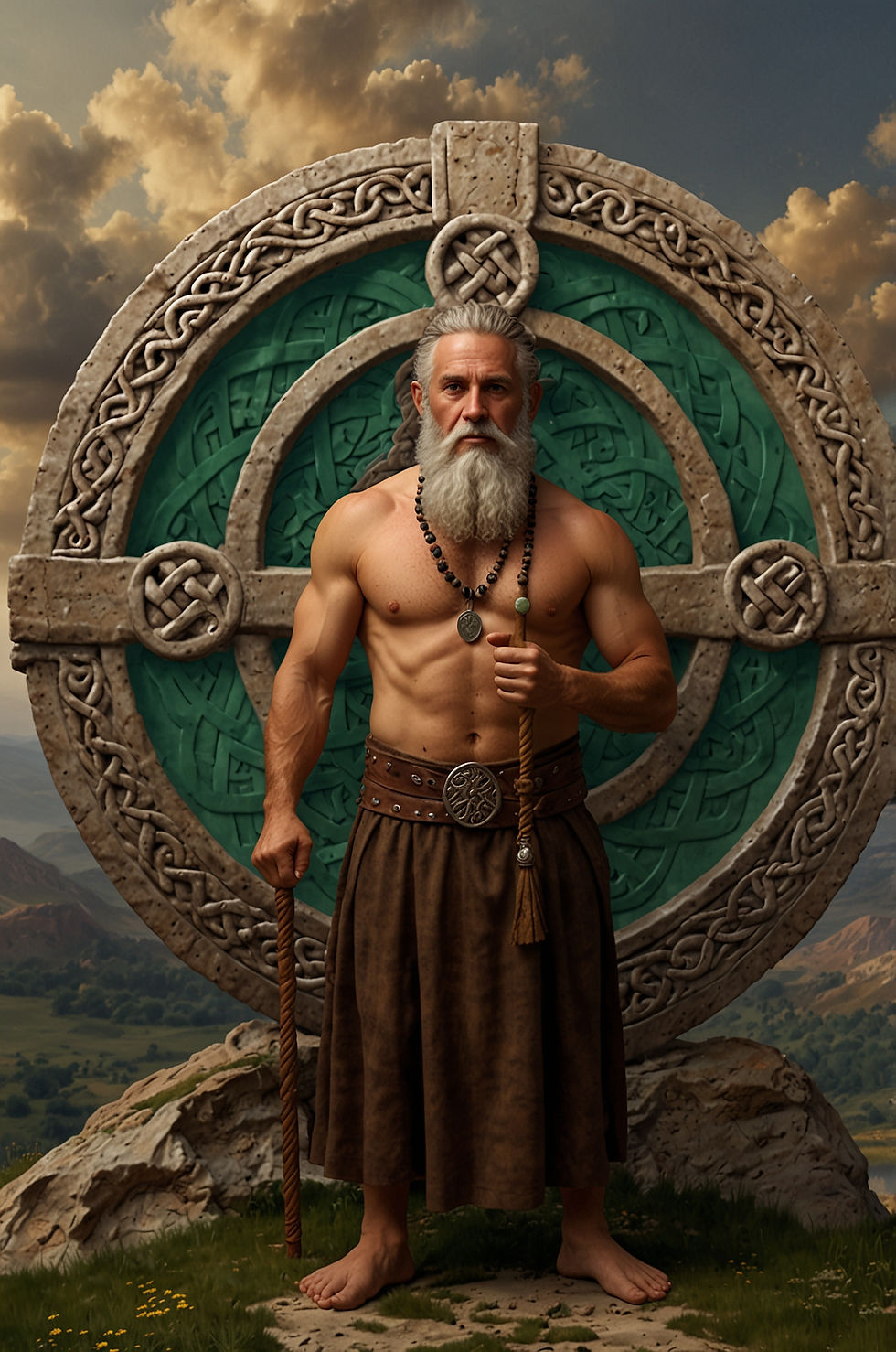
A cornerstone of British Israelism is the idea that the magical traditions of the Celts—druids, fae, and the Tuatha Dé Danann—reflect a hidden Israelite spirituality. Proponents claim that these myths encode biblical truths, with gods like Lugh and Brigid being reinterpreted as Israelite prophets.
However, Celtic paganism and Israelite religion differ fundamentally. The Celts practiced polytheism, while the Israelites were strictly monotheistic. The Tuatha Dé Danann, with their supernatural abilities and ethereal beauty, are akin to Norse or Greek deities, not biblical figures. As mythologist Dr. Miranda Aldhouse-Green argues:
“To force a biblical framework onto Celtic mythology is to ignore its indigenous roots. The Tuatha Dé Danann are not a ‘lost’ tribe—they’re a reflection of human imagination, not historical fact.”
The appeal of British Israelism, then, lies not in its accuracy but in its mystique. It offers a grand narrative that intertwines the sacred and the heroic, allowing adherents to see themselves as the heirs to two of history’s most formidable civilizations.
A Myth for the Modern World
British Israelism may lack scientific or historical credibility, but its enduring popularity speaks to our fascination with identity and legacy. In a world where ancient DNA and digital archives have made history more accessible than ever, why do people still cling to myths like this?
The answer lies in the power of narrative. British Israelism provides a sense of purpose, a divine mandate, and a link to a glorious past. Yet, as scholars remind us, history is not a game of hidden keys and secret codes—it’s a discipline grounded in evidence, context, and critical inquiry. As Dr. Caramelli concludes:
“Myths are valuable as reflections of the societies that create them. But when they’re mistaken for history, we lose sight of what it truly means to understand the past.”
While the idea of a lost tribe of Israel sailing to Ireland may capture the imagination, the real story of the Celts—a tale of migration, adaptation, and resilience—remains a testament to the human spirit without the need for biblical embellishment.
References
Ó Cathasaigh, T. (2018). The Tuatha Dé Danann: Mythology of the Irish Celts. London: Celtic Press.
Caramelli, D. (2020). “Genetic Traces of European Prehistory.” Nature, 581(7806).
Aldhouse-Green, M. (2010). The Celts: A History from the Archeological Evidence. Edinburgh: Edinburgh University Press.
Cline, E. H. (2015). 1177 B.C.: The Year Civilization Collapsed. Princeton: Princeton University Press.


Comments